

Is This an Antique? How to Tell From Photos, Materials, and Marks
Is this an antique? Learn what photos can reveal about age, construction, marks, and repairs — plus clear limits and next steps before paying for an appraisal.
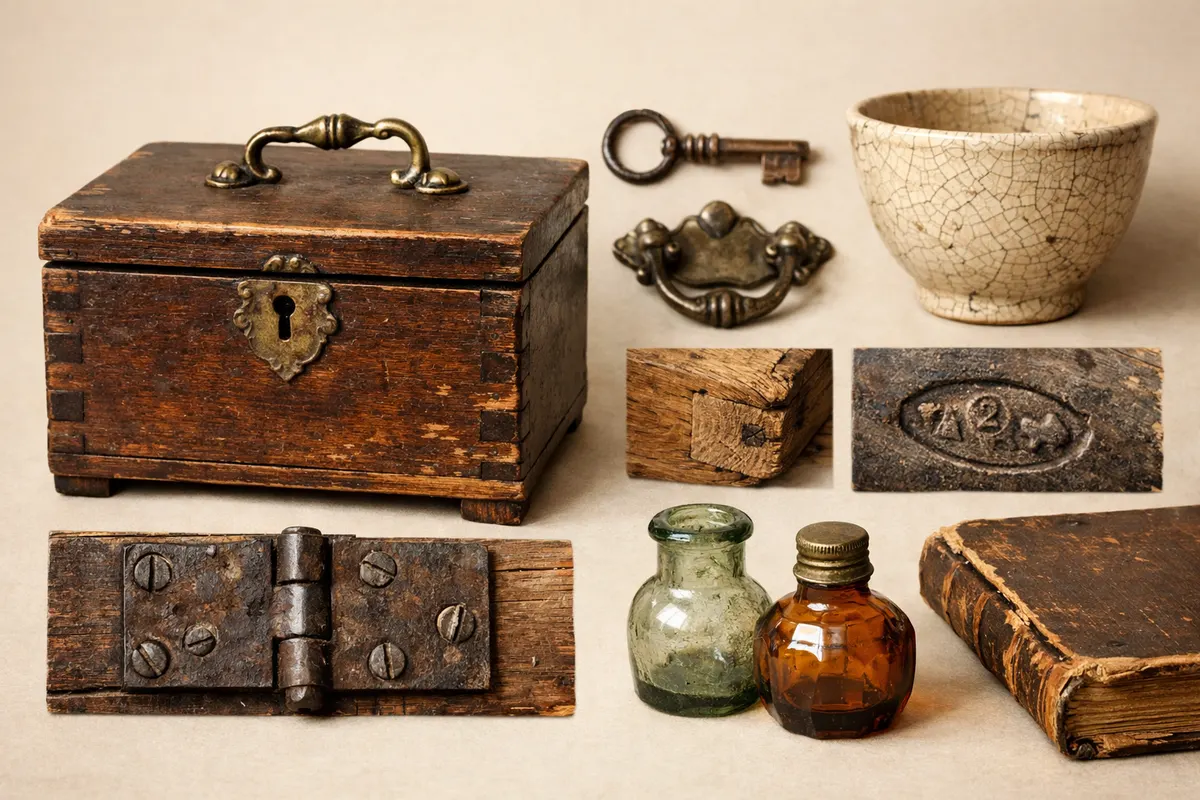
What is possible
When someone asks "is this an antique," a single photo rarely gives a definitive certificate of age, but photographs can reveal strong, practical clues. From construction details to wear patterns and maker marks, images often let you narrow an object’s likely era, production method, and whether it’s worth deeper investigation.
Photos can reliably show visible construction techniques: how a drawer is joined, the type of nails or screws used, whether a surface has genuine patina or modern distressing, and whether a ceramic glaze has crazing consistent with age. Those clues help separate likely originals from modern reproductions or later repairs.
High-quality images let you flag items that deserve professional attention. For example, evidence of hand-cut dovetails, rosehead nails, or a hand-thrown pot’s irregular throwing lines will point toward older manufacture techniques. Conversely, perfectly regular machine-cut joints, modern machine screws, or identical mass-produced cast markings usually signal a later date.
Photographic clues also support safer next steps: estimating whether a piece might be 19th century versus mid-20th century, identifying the material family (wood, cast iron, porcelain), and spotting restoration or replacement parts that affect condition and value. Treat photo-based conclusions as informed hypotheses rather than final answers.
What is not possible
Photos cannot prove provenance, certify authenticity, or provide a market value that experts or auction results would accept. A visual assessment is an important first pass, but it cannot replace title documents, factory records, or lab testing when those are needed to establish origin or worth.
You also cannot reliably identify certain materials or treatments by image alone. For example, some plastics imitate ivory or Bakelite so well that tactile testing or chemical analysis is required. Surface finishes can be artificially aged with solvents, heat, or staining to mimic decades of wear.
Exact dating to a specific year is rarely achievable from photos. Many makers reused labels or stamps for years, and antiques undergo repairs or part replacements that mask original features. Forgers and skilful restorers can conceal tool marks and replace hardware, so visual clues must be weighed alongside history and documentation.
Never assume safety or toxicity from a picture. Lead glazes, fragile structural weakness, or hazardous finishes require testing or hands-on inspection. Likewise, don’t accept a single photograph as proof of value, rarity, or legal status; treat the image as a clue that guides what to inspect next.
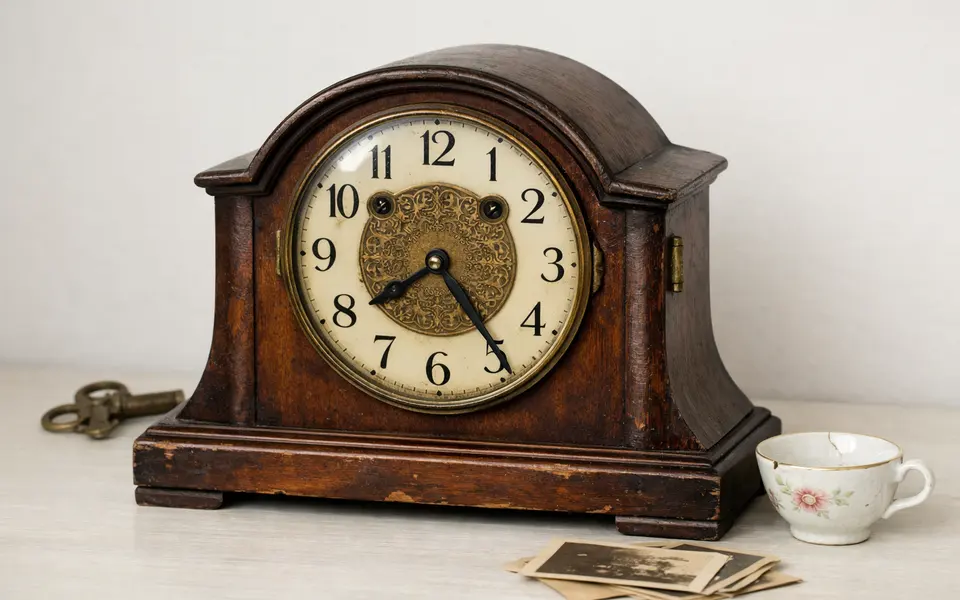
- Cannot confirm provenance or chain of ownership from a photo.
- Cannot substitute for lab tests when material identification (e. g. , ivory vs. bone vs. plastic) matters.
- Cannot give a guaranteed market value or authenticated origin.
- Cannot detect some alterations, concealed restorations, or internal repairs.
Visual clues
Good photos focus where the object reveals how it was made. Start with overall shots, then take close-ups of joints, fasteners, the underside, marks, and any areas of wear or repair. A ruler or coin in at least one close-up is invaluable for scale and proportion.
Below are practical, photo-friendly clues that tend to hold up across furniture, metalwork, and ceramics. Each clue connects to a manufacturing method, a likely era, or a sign of later intervention. Use them to form a hypothesis about whether an item is likely old enough to be called an antique.
- Joinery: Hand-cut dovetails are typically irregular with varying pin widths and slight tool marks; machine-cut dovetails are uniform and thin. Butt joints with modern staples or biscuit joints point to later manufacture.
- Nails and tacks: Look for round rosehead nails, cut nails with square shafts, or hand-riveted nails—these suggest pre-20th-century work. Modern wire nails and uniform headed nails indicate later production.
- Screws: Early screws have tapered shanks and irregular slots; machine-made, pan-head, and Phillips screws appear after the late 19th–early 20th century. Square-head or slotted wood screws with uneven threads often predate mass production.
- Tool marks and saw kerfs: Irregular rasp or hand-planer marks and wide saw kerfs suggest earlier handwork. Thin, uniform saw cuts indicate powered bandsaws or circular saws typical of industrial production.
- Surface patina and wear patterns: Genuine patina accumulates in predictable places—around handles, chair arms, and feet—showing consistent oxidation or finish wear. Isolated, even 'distressing' marks or fresh-looking chemicals often signal artificial aging.
- Glaze and ceramic clues: Crazing (network of fine cracks), glaze wear on high points, and hand-thrown throwing lines point to older ceramics. Mold seams and uniform textures usually indicate later mass production.
- Maker’s marks, stamps, and labels: Stamped marks pressed before firing, hand-signed marks, and paper labels glued to underside surfaces can identify origin and period. Watch for printed labels that are too crisp or modern adhesives that indicate later attachments.
- Cast metal details: Look for seam lines, sprue marks, and irregularities from sand casting—these point to older casting techniques. Smooth, highly uniform castings are typical of modern production methods.
- Repairs and replacements: Newly installed screws, matched new wood patches, or modern glue traces often mean the piece has been altered; a replacement part can substantially change an object’s originality and value.
Verification path
Use photographic evaluation to decide what kind of verification is appropriate. If photos suggest the item is likely old or potentially valuable, collect provenance details (who owned it, where it came from, and any receipts), then assemble targeted images: overall views, maker marks, joinery, undersides, and any labels or stamps.
When deeper verification is needed, choose the tool that matches the question. Condition and originality are usually best judged by a conservator or specialist who can examine repairs and finishes in hand. Material composition (is this metal an alloy? is that ivory? ) requires lab tests—X-ray fluorescence (XRF) for metals or specialized analyses for organics.
For research on marks and historical patterns, consult reference resources and specialists. A dedicated article like "How to Identify Antiques: Marks, Materials, Age, and Value Clues" provides a deeper next step for interpreting stamps and labels. Auction archives, maker catalogs, and museum records are also useful when tracking a maker or model number.
If you decide to seek a formal appraisal or authentication, pick a qualified specialist in the object’s category—furniture, ceramics, metalwork, textiles—and expect fees. Prepare a short packet: clear photos, measurements, provenance notes, and the specific question you want answered (age range, originality, or market estimate). Keep in mind that laboratory dating methods are precise but costly and usually reserved for high-value or legally sensitive items.
- Collect targeted photos: full object, scale reference, joinery, underside, maker’s mark, and repair areas.
- Document what you already know: acquisition history, prior owners, and any paperwork.
- Choose verification based on risk: conservator for condition, appraiser for value, lab tests for material composition.
- Use specialized references and auction archives when maker marks or serial numbers appear.
Related guides
Collect photo clues with the Antique Identifier app
Scan your item with Antique Identifier to gather likely category, age clues, and suggested next steps. The app helps you capture the key views experts use—joinery, marks, fasteners, and wear—then recommends follow-up checks. Use the results as a first pass; for value, authentication, or lab testing, treat the scan as a research aid, not a final verdict.
Take the next step →Frequently asked questions
Can I tell the age of an item from a single photo?
A single photo can suggest an approximate era by showing construction techniques or hardware, but it cannot deliver a precise date. Multiple high-quality images—especially of joints, undersides, marks, and wear patterns—improve reliability. Treat any age estimate from photos as provisional until someone can inspect the item in person or run material tests.
Are maker’s marks always reliable for identification?
Maker’s marks are strong clues but not infallible. Marks can be copied, reused, or applied after the fact. Paper labels are particularly fragile and easy to replicate or replace. Confirm a mark by comparing it to reputable references, checking placement and impression depth, and combining mark evidence with construction and material clues.
How accurate are screw and nail clues for dating?
Fasteners are practical time indicators: hand-forged nails, cut nails, and early screw types point to earlier periods, while modern uniform wire nails and machine screws date later. However, nails and screws are easy to replace during repairs, so always check surrounding joinery and wear for a consistent story.
When should I get a lab test or professional appraisal?
Consider lab tests when material identification is critical (e. g. , distinguishing ivory from bone or determining metal alloy) or when legal or insurance needs demand scientific proof. Hire a specialist appraiser if the item appears rare or valuable, or if you need a market valuation for sale, insurance, or probate. Use photographic assessment first to decide which experts or tests are appropriate.