

Wooden side table
Estimated value
$50 - $150
A practical photo identification of a wooden side table showing materials, size, condition and a cautious $50–$150 value range, plus what to check next.
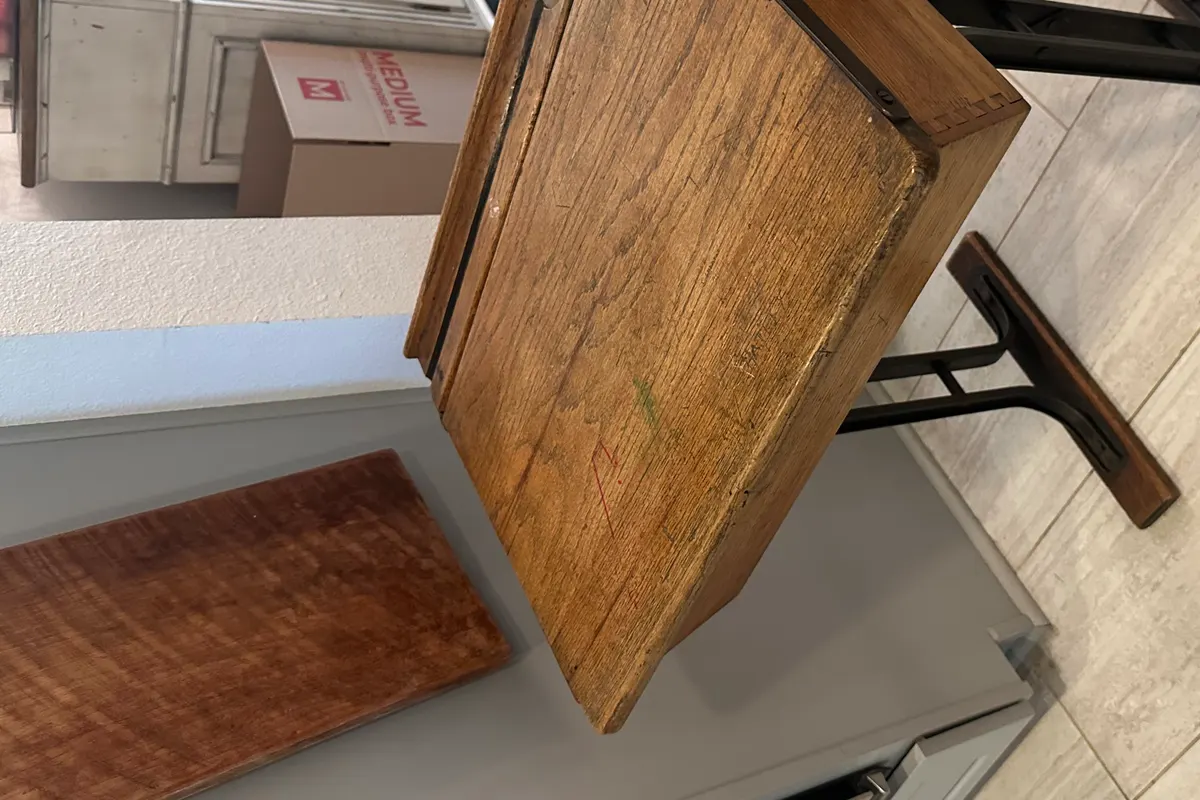
Identification summary
This record presents a single photographed wooden side table identified from the submitted scan. The item registers as Contemporary in era, made of wood and metal, and described as in good condition with some signs of aging and use.
Measured at approximately 24 inches long, 14 inches wide, and 16 inches high and weighing roughly 10–15 lbs, the piece is listed as common with an estimated value range of $50–$150. Provenance and maker information were not provided with the scan.
Era
| Era | Contemporary |
|---|
Origin
| Origin | Unknown |
|---|
Material
| Primary materials | Wood and metal |
|---|
Condition
| Condition | Good, with some signs of aging and use |
|---|
Physical Details
| Dimensions | Approximately 24 inches long, 14 inches wide, and 16 inches high |
|---|---|
| Weight | Approximately 10-15 lbs |
Provenance
| Provenance | Unknown |
|---|
Rarity / Market
| Rarity | Common |
|---|
Valuation
| Estimated value | $50 - $150 |
|---|
Record
| Identified at | 2026-07-30T03:04:01.826Z (scan source: scans) |
|---|
Historical context
Contemporary wooden side tables like this one are often mass-produced with mixed-material construction—wood tops or veneers joined to metal supports or brackets. Without maker marks or distinctive joinery visible in a photo, a cautious identification will treat the piece as functional, mass-market furniture rather than a collectible antique.
Market interest and value for common contemporary side tables typically reflect condition and utility rather than historical significance. The $50–$150 range given here aligns with similar, well-used pieces sold locally or through general secondhand channels; provenance or a maker label could change that range substantially.
Keep identifying
Browse more identifications across every category.
Browse all examplesRelated guides
Have your own antique furniture identification identified
Photograph the top, underside, any hardware, and close-ups of edges and joinery, then try Antique Identifier for a clear photo-based read of visible materials, condition, and likely market range. Use the app as an early check—if you see maker marks or unusual construction, note those details for a specialist. For guidance on joinery and era clues, see Antique Table Styles: Legs, Tops, Joinery, and Era Clues (https://antiqueidentifierbypicture.app/blog/antique-table-styles).
Take the next step →Frequently asked questions
How certain is this identification from a single photo?
The scan gives a confident reading on visible aspects—materials, dimensions, and surface condition—but cannot confirm origin, maker, or hidden repairs. Treat the result as a practical first pass that narrows possibilities rather than a definitive appraisal.
Why is the estimated value given as a range?
A cautious value range ($50–$150) reflects visible condition and commonness in resale markets while accounting for local demand and uncertainty about provenance. Photos alone rarely justify a single appraisal figure.
What additional photos or checks would improve the identification?
Close-up shots of underside, attachment points, fasteners, joinery, and any labels or stamps help a lot. Clear photos of edges where veneer meets core or of the metal fasteners can reveal manufacturing methods that shift attribution and value.
If I think my table is older or worth more, what should I do next?
Document detailed images of hardware and joinery, note any labels or stamps, and compare those clues to reference material. For a practical next step, use specialist resources such as the Antique Table Styles guide (Antique Table Styles: Legs, Tops, Joinery, and Era Clues) to match construction details before seeking an in-person appraisal.