

Antique Types: Furniture, Ceramics, Glass and Metalwork
Explore the main antique types, from furniture and ceramics to glass and metalwork, with clear category boundaries and useful specialist resources.
Quick answer: the main types of antiques
The main antique types include furniture, ceramics, glass and metalwork, alongside textiles, paintings, prints, books, clocks, jewellery, toys and other specialist collecting fields. These categories help you choose a useful research direction. They do not, by themselves, establish that an object is old, authentic or valuable.
A practical taxonomy uses two kinds of label together: what an object does and what it is made from. A chair belongs to furniture because of its function, whether its frame is wood or metal. A drinking vessel might belong to ceramics, glass or silver collections depending on its material. Neither approach works as a universal rule for every object.
Keep category, object type and style separate in your notes. “Ceramics” is a broad category, “jug” names a form, and “Art Nouveau” describes a style context. A piece can resemble a historical style without having been made during that period. Start with the category you can support, then leave uncertain details open.
The sections below explain the boundaries of each main collecting field and the resources that fit it. For the later task of assessing marks, construction and age evidence, use How to Identify Antiques: Marks, Materials, Age, and Value Clues. Category selection gives that detailed research a clearer starting point.
- Furniture: seating, tables, beds, cabinets and other objects made to furnish a space.
- Ceramics: pottery and porcelain objects, including vessels, figures and tiles.
- Glass: vessels, tableware, decorative glass and specialist areas such as stained glass.
- Metalwork: metal vessels, utensils, fittings and decorative objects, with specialist branches such as silver.
- Other collecting fields: textiles, pictures, paper, clocks and watches, jewellery, toys and instruments.
Furniture: classify by function, then refine the form
Furniture is primarily a functional category. Chairs and stools provide seating; tables provide working or serving surfaces; cupboards, chests and cabinets provide storage. A useful first label is the object form, such as sideboard, writing desk or armchair. Material, construction and decoration refine that description once the broad function is clear.
Wood is common in furniture, but it does not define the category. A metal bedstead remains furniture, while a wooden toy, bowl or carving does not become furniture simply because it is wooden. Upholstery, glass panels, stone tops and metal mounts may all be parts of a furniture object. Record those materials without forcing the piece into only one material group.
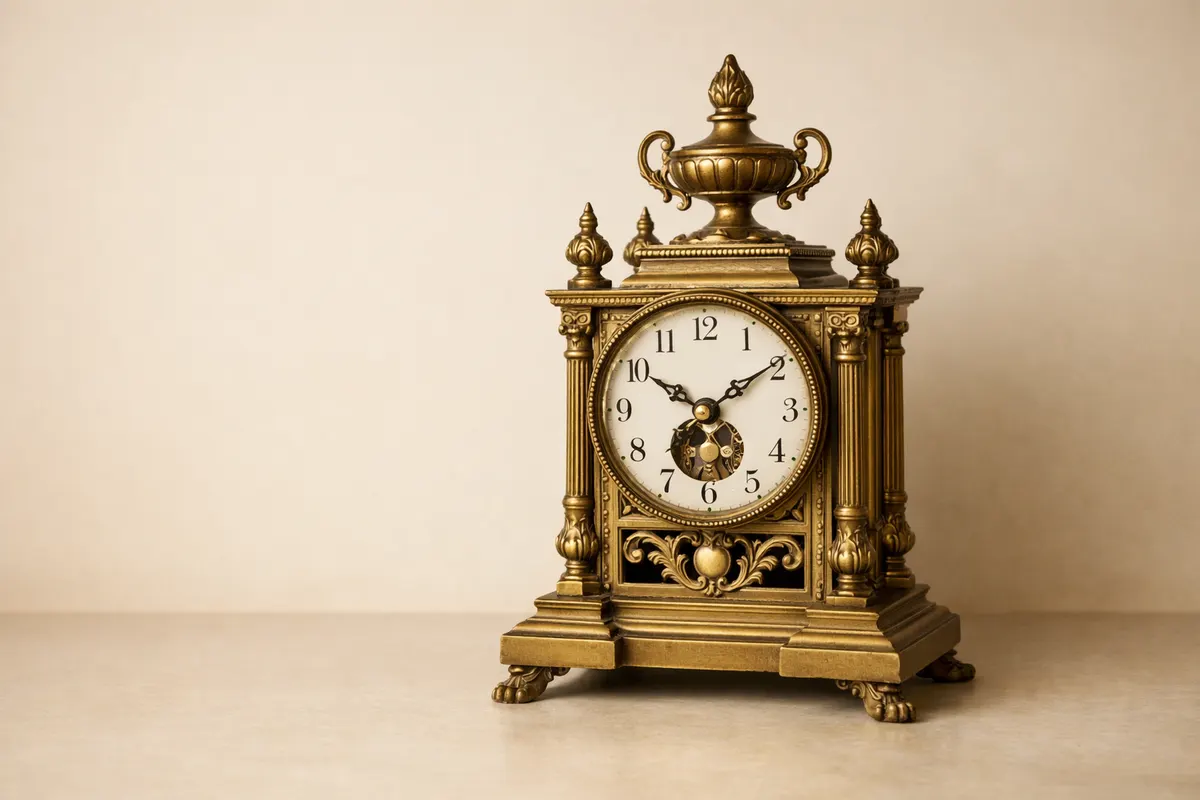
Boundaries are less tidy around mirrors, clocks, screens and architectural fittings. Catalogues may place these with furniture, decorative arts or a specialist collection. Use the name of the whole object as your main search term and add its material or function when needed. A mantel clock deserves clock references even when its case resembles a miniature cabinet.
For terminology and comparisons, start with the V&A Furniture collection and its object records. Then narrow to a reference covering the relevant furniture form, region or maker. A furniture specialist is the appropriate next contact when your question concerns construction or attribution; an upholsterer or conservator may address a different question about condition or treatment.
- Common subgroups: seating, tables, storage furniture, beds and desks.
- Illustrative classification: an upholstered chair with a wooden frame is furniture, with upholstery recorded as a component.
- Useful research question: “What kind of storage furniture is this?” before “Which period made this decoration popular?”
- Boundary to remember: material and decorative style alone do not determine the object’s function or date.
Ceramics: pottery, porcelain, figures and tiles
In antique collecting, ceramics covers fired clay-based objects such as pots, plates, jugs, figures and tiles. Earthenware, stoneware and porcelain are important material groups within this field. “Tableware” describes use, while “ceramics” describes the broader material category: a porcelain plate can belong to both.
Decoration supplies another layer of description. A blue-and-white plate, a brightly glazed figure and an undecorated storage jar can all be ceramics. Colour and pattern may help select a specialist reference, but neither establishes a factory or country on its own. Similar-looking decoration appears across different makers and collecting traditions.
The boundary with glass can be confusing when surfaces are glossy or materials are translucent. A ceramic body can have a glassy glaze; that surface does not make the entire object a glass vessel. When a photograph does not show enough to distinguish the body, use a provisional description such as “ceramic-looking vase” instead of forcing a precise material label.
The V&A Ceramics collection is a useful starting point for exploring pottery, porcelain, figures and tiles across different traditions. For a more focused search, choose a factory catalogue, regional pottery reference or museum collection devoted to the suspected material group. If the object has metal mounts, research the ceramic body and the mounts separately before assuming they were made together.
- Common subgroups: tablewares, storage vessels, decorative vessels, figures and architectural ceramics.
- Illustrative classification: a porcelain teacup is ceramics and tableware; its painted flowers describe decoration, not a separate material category.
- Useful reference match: a tile catalogue for a tile, or a factory reference for a supported maker lead.
- Boundary to remember: a ceramic figure can also be catalogued as sculpture; these labels describe different aspects of the same object.
Glass: separate the object form from its manufacture
Glass collecting includes drinking glasses, bottles, decanters, bowls, vases and decorative pieces. Stained-glass panels and glass sculpture are related specialist fields. Begin with the object’s form and likely use: a bottle and a drinking glass may share a material but lead to different catalogues and collecting communities.
Manufacturing and decoration terms are a second layer, not mutually exclusive categories. A vessel may be blown and later cut or engraved. Other objects may be pressed or cast. Avoid treating “hand-blown” and “mould-made” as a complete either-or classification: glassmaking can combine processes, and a photograph may not reveal which were used.
Appearance alone is also an unreliable boundary. Glass can be clear, coloured or opaque. A label such as “crystal” needs context and does not establish a particular composition merely because the object sparkles in a photograph. If material identification matters, describe what is visible and leave the composition unconfirmed until there is appropriate evidence.
Use the V&A Glass collection to explore vessel glass, art glass and related techniques. Next, select a reference for the actual subgroup: bottles, drinking glasses, decorative vessels or a supported maker lead. Antique Glassware Identification provides the site’s more detailed visual-clue guidance once glass is the working category. For a glass vessel held in a metal stand, record both components rather than treating the stand as proof of the vessel’s maker or age.
- Common subgroups: drinking vessels, bottles, tableware, decorative vessels and architectural glass.
- Illustrative classification: an engraved drinking glass belongs to glass, with “drinking vessel” as its form and “engraved” as a decoration term.
- Useful reference match: a bottle reference for a bottle, rather than a general catalogue of decorative vases.
- Boundary to remember: a manufacturing technique may help describe an object without proving its date or maker.
Metalwork: vessels, utensils, fittings and decorative objects
Metalwork is a broad collecting field that includes vessels, utensils, candlesticks, boxes, fittings and decorative objects made from metals and their alloys. Silver is one specialist branch; copper-alloy objects, ironwork and other groups require their own references. Function remains useful: a teapot, a door fitting and a sculpture ask different research questions even when all appear to be metal.
Keep the apparent material separate from a confirmed composition. “Silver-coloured” does not establish solid silver, and a gold-toned surface does not establish gold. Plating, coatings and mixed construction can change what an object looks like. A category description can remain useful while the precise metal is still unknown.
A furniture handle is metalwork as a component, but the whole cabinet remains furniture. Jewellery, watches, coins and medals may also involve metal yet are usually researched through their own specialist literature. Choose the reference that answers your question: a watch specialist for the movement, for example, and a relevant metalwork reference for the case.
The V&A Metalwork collection offers a broad range of object forms and manufacturing contexts. For silver marks, move to references specific to the relevant country and marking system; the site’s Silver Hallmarks Identification guide provides a focused starting point. A readable stamp is evidence to investigate, not automatic proof that a piece is genuine, correctly attributed or made entirely from the stated metal.
- Common subgroups: tableware, lighting, domestic utensils, architectural fittings and decorative metalwork.
- Illustrative classification: a metal candlestick is a lighting object within metalwork; its exact alloy can remain unconfirmed.
- Useful reference match: a specialist silver-mark reference for a silver lead, or an ironwork catalogue for an iron fitting.
- Boundary to remember: the material of a decorative mount does not determine the category, maker or date of the whole object.
Other antique categories, mixed objects and limits
Several important collecting fields sit beyond the four categories above. Textiles include woven and embroidered objects, rugs and dress. Pictures include paintings, drawings and prints, whose media and production methods lead to different references. Books and paper collectibles need bibliographic or archival resources. Clocks, watches, musical instruments and scientific instruments combine materials with specialist questions about function and construction.
Choose a primary category for the question you are trying to answer, then keep secondary labels. For a framed print, the image and printing process belong to print research, while the frame may require separate furniture or decorative-arts expertise. For a clock with a ceramic case and metal mounts, clock references address the mechanism while ceramics and metalwork references address the exterior. No single label needs to settle every part of the object.
An antique identification guide becomes more useful after this sorting step. Select one that covers the object’s category, region or possible maker, and check whether its examples have documented descriptions. A resemblance to a museum object is a research lead, not a transfer of that object’s date or attribution to yours. Museum collections also contain modern objects, so inclusion in a collection does not itself establish antique status.
Category classification directs the next stage of research. Photos may support a broad object type and apparent materials, while exact age, maker, authenticity, ownership history and value remain separate questions. Replacements and repairs can also combine parts from different periods. Keep those uncertainties in your notes and seek the relevant specialist when the answer matters.
- Textiles and dress: textile collections and references organised by fabric, technique or garment type.
- Paintings, prints and paper: art collection records, print catalogues, library catalogues and archives appropriate to the object.
- Clocks, watches and instruments: specialist collections and technical references for the mechanism or function.
- Mixed objects: describe the whole object first, then list components that need a separate research path.
Related guides
Find a starting category for your object
If you are unsure where an object belongs, try the Antique Identifier tool at https://antiqueidentifierbypicture.app/tools/antique-identifier. Upload a clear photo for a first-pass AI analysis of the likely item type, apparent materials and visible details to investigate. Use the result to choose a suitable category reference or specialist. It does not prove age, maker, authenticity or value.
Take the next step →Frequently asked questions
What are the main categories of antiques?
Furniture, ceramics, glass and metalwork are broad collecting categories. Other fields include textiles, paintings, prints, books, clocks, jewellery, toys and instruments. These categories overlap: a porcelain figure is ceramics by material and sculpture by form. Use the category that best fits your research question, with secondary labels when useful.
Is furniture always made from wood?
No. Furniture is classified mainly by function and form, such as a chair, bed or cabinet. It can use wood, metal and other materials, often in combination. A wooden bowl is not furniture simply because it is wooden, while a metal bedstead is still furniture.
How should I classify an object made from several materials?
Name the whole object first, then record its components. A ceramic-cased clock belongs in clock research for its mechanism, ceramics research for its case and perhaps metalwork research for its mounts. Do not assume that all components share a maker or date just because they are now attached.
Does identifying the category prove that an object is antique?
No. Category names describe what kind of object it is, not how old it is. Furniture, pottery and glass are still made today, and older styles can be reproduced. Establishing age or attribution requires further evidence appropriate to the object; a category label or a photograph alone cannot settle those questions.