

Wall Clock
Estimated value
$200 - $400
A focused example of clock identification: what a photo-based scan can confirm about era, materials, condition and what still needs hands-on checks.
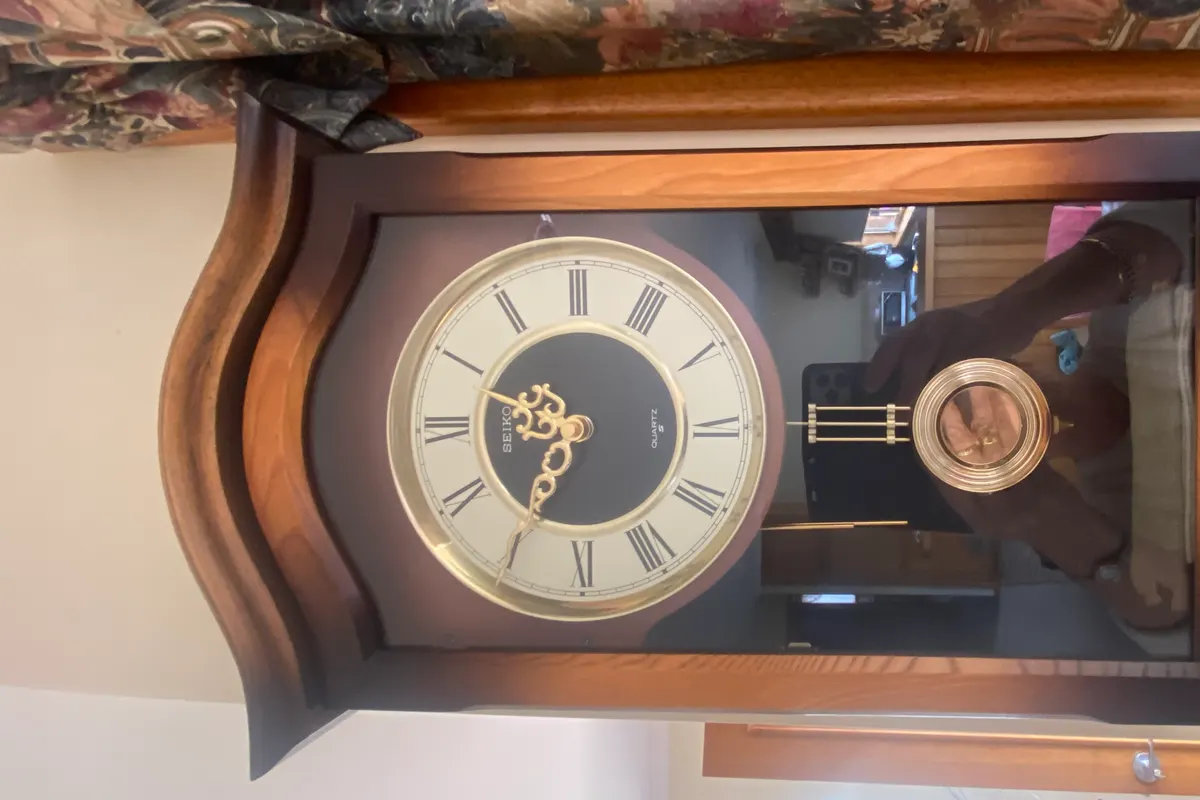
Identification summary
This identification report presents a single clock recorded as contemporary to the late 20th century. The scan fields report its origin as unknown, likely Japan or China; materials are listed as wood, glass, and metal (pendulum and hands); condition is described as good with minor scratches and signs of use.
Reported dimensions are approximately 60 cm x 25 cm x 10 cm with a weight around 3 kg. Provenance is unknown and rarity is recorded as Common. The supplied estimated value range for this example is $200 - $400.
Photographs and the supplied scan fields are enough to place this piece in a late 20th century, mass-produced category and to describe materials and condition. They cannot, however, confirm movement authenticity, maker marks hidden inside the case, or any restoration history that wasn’t documented at the time of the scan.
Era & Origin
| Era | Contemporary to late 20th century |
|---|---|
| Origin | Unknown, likely Japan or China |
Materials
| Primary materials | Wood, glass, metal (for the pendulum and clock hands) |
|---|
Condition
| Condition | Good, with minor scratches and signs of use |
|---|
Physical Details
| Dimensions | Approximately 60 cm x 25 cm x 10 cm |
|---|---|
| Weight | around 3 kg |
Provenance & Rarity
| Provenance | Unknown |
|---|---|
| Rarity | Common |
Market
| Estimated value | $200 - $400 |
|---|
Authentication
| Confidence | null |
|---|
Historical context
Late 20th century clocks from East Asia—often produced in Japan or China—were frequently designed for home markets and used standard movements and case construction to keep costs down. The combination of wood, glass, and simple metal pendulum parts aligns with mass-produced designs of that period.
Because the scan records this item as Common with an estimated value between $200 and $400, it fits the market pattern for well-made but non-collector mass-market wall clocks of the late 1900s. Higher values in this category usually require documented maker, unusual materials, or a noteworthy provenance.
More Antique Identification identifications
Keep identifying
Browse more identifications across every category.
Browse all examplesRelated guides
Have your own antique identification identified
After you’ve reviewed the scan details here, consider using Antique Identifier to organize your clock photos, note suspected maker marks, and compare visible clues across images. It’s a practical next step for tracking evidence and preparing for an in-person inspection: https://antiqueidentifierbypicture.app/tools/antique-identifier
Take the next step →Frequently asked questions
How does antique identification change when I only have photos of a clock?
Photos let you confirm visible materials, dimensions, condition, and some stylistic era indicators, but they cannot prove movement authenticity, hidden maker marks, or undocumented repairs. Use photos as a first pass, then plan a physical inspection of the movement and interior for confirmation.
Can a single photo confirm a clock's country of origin?
Rarely. A single external photo may suggest a probable origin from style or visible labels, but solid confirmation normally requires seeing manufacturer stamps on the movement or inside the case, or documentation that lists the maker.
What photos help most for clock identification?
Take clear images of the dial (including any signatures), the movement (with case opened), the backboard and any stamps or labels, and close-ups of wear or repairs. Reported dimensions and weight, like those in the scan, also help place the piece in the correct category.
How reliable are online value ranges for a late 20th century clock?
Reported ranges like $200 - $400 (this scan) are useful ballpark figures but are not appraisal-grade. Reliability improves with confirmed maker, movement condition, and provenance. When value matters, get a hands-on appraisal or documented sale comparables.