

Framed map and postal memorabilia
Examine a framed postal cover, map, and plaque: learn what the visible 1942 postmark establishes and which age, provenance, and value claims remain unverified.
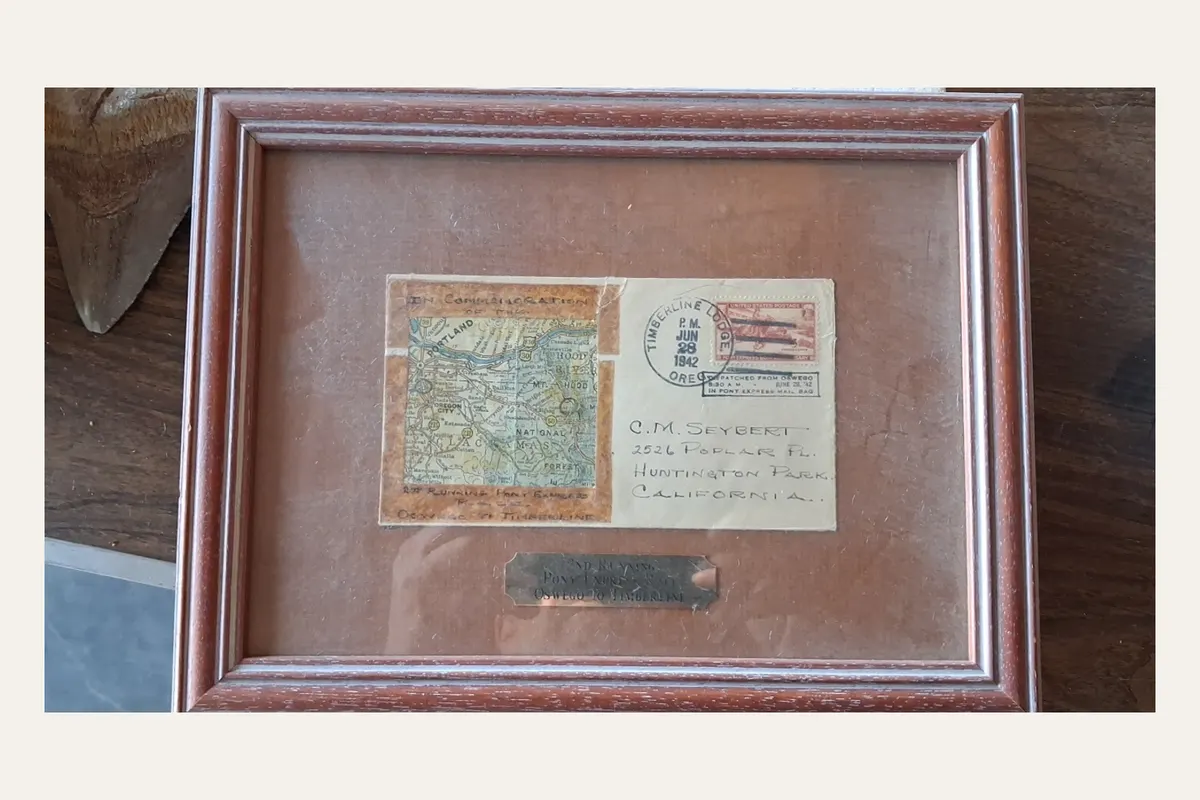
Identification summary
This plaque identification example shows a framed postal cover with a printed map on the left, a stamp and circular postmark on the right, and a small metal plaque below. The frame has a reddish-brown finish, while the backing and paper show visible discoloration and wear. These are observations from the submitted photograph, not a verified appraisal.
The readable postmark includes June 28, 1942. That date is evidence about the postal cover. It does not establish when the frame was made, when the plaque was attached, or whether the components have remained together since 1942. A later display can contain an older document.
The defensible identification is a framed display of map and postal memorabilia with a plaque. Its maker, assembly date, ownership history, and resale value remain unresolved. A photograph can direct the next inspection, but it cannot supply measurements, material analysis, or a documented chain of ownership.
Evidence
| Visible date | June 28, 1942 postmark on the cover |
|---|---|
| Assembly date | Not established |
| Condition | Visible discoloration and surface wear |
| Provenance and value | Not verified |
Historical context
Start with the paper. Compare the map, cancellation, stamp, address, and any handwritten notes as separate pieces of evidence. A place name printed on the map establishes the subject being depicted; it does not automatically identify the workshop that assembled the frame. Similarly, an address on a cover identifies its intended destination rather than the later owner of the display.
The small plaque is relevant, but its dark surface and reflections make a complete transcription uncertain in this view. Obtain a close, sharply focused photograph with light from the side before recording names or inscriptions. Preserve uncertain letters as uncertain rather than filling them in from an expected story.
Wear can help describe condition, but it is not a clock. Fading, scratches, staining, and chipped finish depend on handling and storage as well as age. Do not turn those visible marks into an exact manufacturing date or a rarity rating. There is also no scale reference here, so dimensions and weight need direct measurement.
Photograph the whole front, frame corners, plaque, and reverse. A label, framing stamp, or inscription on the back could connect the components to a maker or owner. Take those views without opening a fragile frame or removing paper from its backing. Keep the original images alongside any transcription so another reader can check your interpretation.
For a value estimate, compare documented sold examples with similar postal material, condition, and provenance. A generic framed print is not necessarily comparable to a researched postal-history display. An experienced postal-history dealer can examine the cover, while a conservator can advise if the paper or mounting needs attention. Avoid polishing the plaque or cleaning the paper just to improve a photograph.
More Antique Identification identifications
Keep identifying
Browse more identifications across every category.
Browse all examplesRelated guides
Have your own antique identification identified
Use Antique Identifier (https://antiqueidentifierbypicture.app/) for a photo-based identification suggestion. Compare the result with the visible marks and documentary evidence; it does not authenticate the display or establish an appraisal value.
Take the next step →Frequently asked questions
Does the 1942 postmark date the entire display?
No. It dates the cancellation visible on the postal cover. The frame, plaque, and assembly may be later.
Can the photograph establish a price?
No. Identification, condition, provenance, and relevant completed sales all need review before a defensible estimate.
What is the most useful next photograph?
A readable close-up of the plaque and a full view of the reverse could reveal inscriptions or labels. Do not dismantle the display to obtain them.