

Cut Glass Perfume Bottle
By Miles Atwood
Estimated value
$50 - $150
Learn which details a photo can prove for antique bottle identification, what remains uncertain, and smart next steps before relying on a single scan.
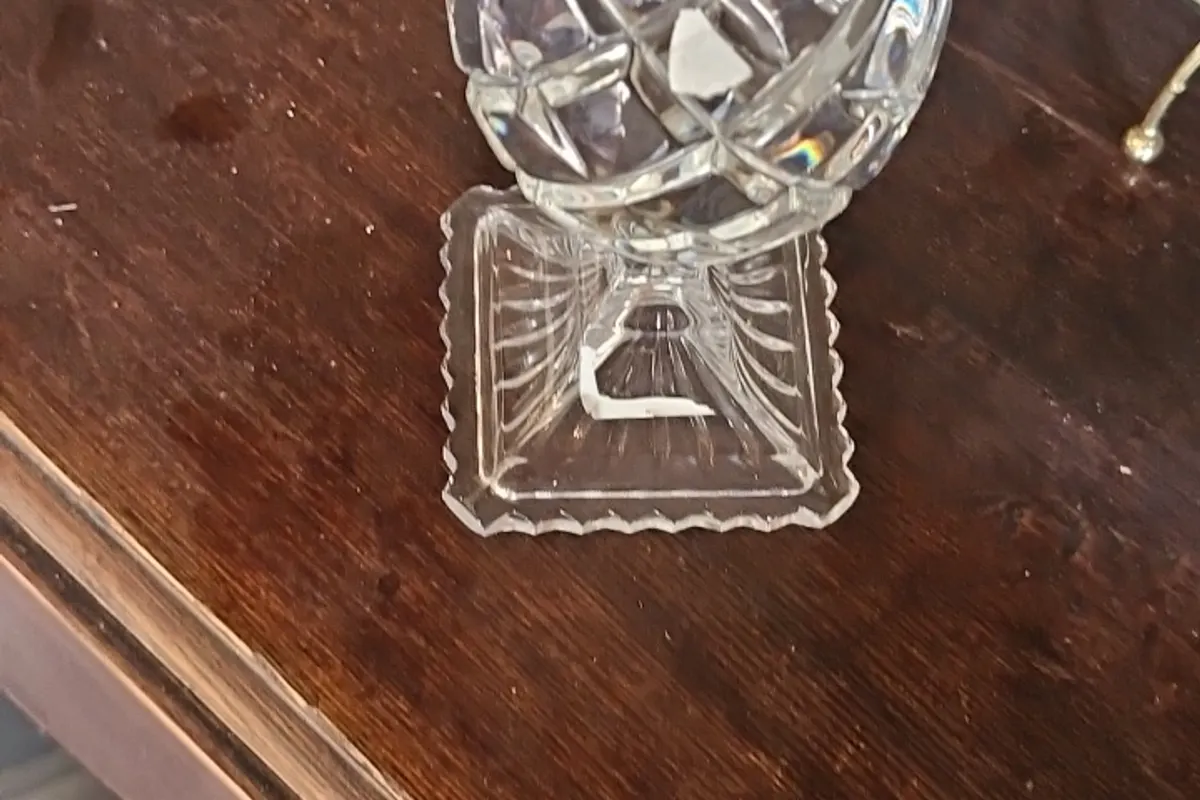
Identification summary
This entry presents a single identification result reported from a submitted scan. The scan lists the item era as "20th century or earlier," material as "Crystal," and origin as "Unknown, possibly European."
Reported condition is "Good, with some minor surface scratches," with physical dimensions given as "Approximately 4 inches high" and weight as "Approx. 1 pound." Provenance is listed as "Unknown" and the scan records rarity as "Moderately rare" and an estimated value of "$50 - $150."
The scan's confidence field is null, so the recorded attributes should be treated as reported values rather than an appraisal or final authenticity opinion. Photo-based identification can point to likely matches, but it cannot confirm provenance, hidden repairs, or maker marks that require hands-on inspection or additional paperwork.
Era & Origin
| Era | 20th century or earlier |
|---|---|
| Origin | Unknown, possibly European |
Material
| Material | Crystal |
|---|
Condition
| Condition | Good, with some minor surface scratches |
|---|
Physical Details
| Dimensions | Approximately 4 inches high |
|---|---|
| Weight | Approx. 1 pound |
Provenance & Rarity
| Provenance | Unknown |
|---|---|
| Rarity | Moderately rare |
Valuation
| Estimated value | $50 - $150 |
|---|
Record
| Identified at | 2026-10-12T20:46:30.411Z |
|---|---|
| Scan confidence | null |
Identification summary for this antique bottle
Antique bottle identification depends on reported details as much as visible clues. For this example the scan explicitly reports Era: "20th century or earlier," Material: "Crystal," and Origin: "Unknown, possibly European." Those values form the baseline of the identification narrative rather than a new visual judgement.
The scan lists Condition as "Good, with some minor surface scratches," Dimensions as "Approximately 4 inches high," Weight as "Approx. 1 pound," Provenance as "Unknown," Rarity as "Moderately rare," and an Estimated value of "$50 - $150." Because the scan's confidence value is null, treat these reported values as preliminary and useful for comparison, not as a final authentication or appraisal.
In practical terms, antique bottle identification from a photo can highlight material (crystal vs. glass), approximate era indicators, and surface wear patterns recorded by the scanner. It cannot, by itself, confirm maker marks concealed on the base, provenance paperwork, or the presence of internal repairs—those require hands-on examination or additional documentation.
Key attributes that guide antique bottle identification
Certain reported attributes are more diagnostic than others. Era and material together point to production techniques: the scan’s "20th century or earlier" era plus "Crystal" suggests higher-lead glass and finishing methods consistent with decorative bottles from that broad period, but the origin remains unresolved in the scan.
Condition is especially important. The scan notes "Good, with some minor surface scratches." Surface scratches can indicate age-appropriate wear, but they can also hide restored areas when only photographed. Light wear alone supports an older manufacture date; evidence of modern repairs (glue lines, filled chips) would change conservation recommendations and resale expectations.
Dimensions and weight ("Approximately 4 inches high" and "Approx. 1 pound") narrow down likely function and type—small decorative or scent bottles often fall in that size range. Rarity reported as "Moderately rare" and the estimated value "$50 - $150" reflect the scanner’s aggregate-market signal, not a certified appraisal.
- Era: "20th century or earlier" — useful for narrowing production methods but not maker.
- Material: "Crystal" — indicates quality of glass and likely decorative intent.
- Condition: "Good, with some minor surface scratches" — implies wear consistent with use; hidden repairs can’t be ruled out from photos alone.
- Dimensions & Weight: recorded values narrow type and comparables.
- Rarity & Estimated value: recorded by the scan as "Moderately rare" and "$50 - $150" and should be treated as an initial market signal.
Historical context for antique bottle identification
Crystal bottles and small decorative containers have been produced across Europe and North America throughout the late 19th and 20th centuries. When a scan lists an item as possibly European, that invites targeted comparisons to known regional styles—cut crystal from Bohemia, pressed glass from England, or early 20th-century continental styles—but the scan alone does not substitute for maker marks or documented provenance.
Market interest in smaller crystal bottles tends to be steady but modest; the scan’s estimated value of "$50 - $150" and rarity rating of "Moderately rare" align with the typical trade for intact, good-condition examples without confirmed provenance. If you want deeper context, the Antique Glassware Identification guide on this site gathers visual clues and safe next steps: https://antiqueidentifierbypicture.app/identify/antique-glassware-identification.
Conservative care is recommended: avoid harsh cleaners, store upright in stable humidity, and record the scan data and any known history. If resale or insurance is a goal, a hands-on appraisal or paperwork that verifies provenance is the responsible next step.
More Antique Glassware Identification identifications
Related guides
Compare your photos and next steps with Antique Identifier
After reviewing the reported attributes, organize your photos and comparison notes with Antique Identifier to track visible clues and follow-up checks. Use the site’s free photo check at https://antiqueidentifierbypicture.app/tools/what-is-my-antique-worth as one practical next step to gather additional market context. Remember, a photo-based scan helps prioritize what to check next—it does not replace hands-on inspection or documentation for authentication or formal valuation.
Take the next step →Frequently asked questions
When I'm working on antique glassware identification and only have one photo, what can't be confirmed?
A single photo can show shape, surface wear, and apparent material, but it cannot confirm hidden repairs, internal residues, maker marks on unseen surfaces, or documented provenance. Use the scan's reported values as a starting point and seek additional views, provenance documents, or an in-person inspection for verification.
How reliable is the estimated value from a photo-based scan for this bottle?
The recorded estimate of "$50 - $150" is a market-range signal based on visible attributes and comparable listings. It is not an appraisal. Condition subtleties, confirmed maker marks, and provenance can materially change value, so consider the scan’s estimate provisional.
What should I check next if the scan says the condition is 'Good, with some minor surface scratches'?
Look for signs of repair (filled chips, adhesive residue), check the base and interior for maker marks or pontil marks, and request additional photos showing the base, lip, and any seams. If you suspect restoration, a conservator or experienced dealer can confirm whether repairs affect structural stability or value.
What steps can I take after this identification to verify authenticity or market value?
Keep the scan record and seek corroborating evidence: more photographs from multiple angles, any paperwork or provenance, and, if needed, an in-person appraisal. As an optional next step to organize and compare visible clues across images, consider using the Antique Identifier tools and the free photo check at https://antiqueidentifierbypicture.app/tools/what-is-my-antique-worth.